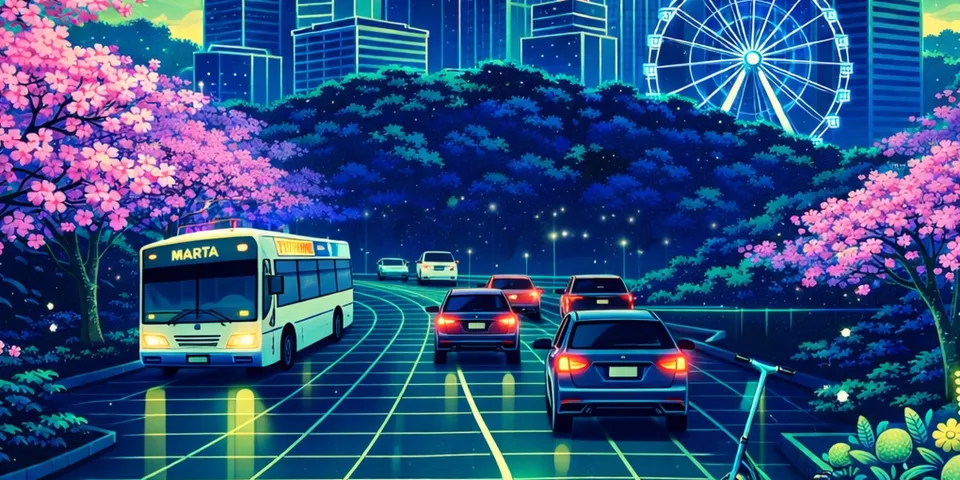
Women + AI Futures 2026
This past week I attended the Women + AI Futures conference for my second year. I went into midtown for the kickoff reception at TechSquare on Wednesday night and attended both in-person days at Atlanta Tech Village.
Here are some of my thoughts coming out of the event:
When we say community and connection? We mean it
The women who show up for this event are not playing around when they talk about culture, community and “walking people through doors.” A highlight was reconnecting with people I met at this event last year. Again, the energy was over-the-top friendly and uplifting. The hugs and across the room waves were backed up with constant discussions of “What are you working on? and “Can I license this tool you built for my client?”
The intimacy of this mini-conference means you’re not just walking around in your cutest conference drip, checking socials to see if your internet friends are here in real life. You are making new friends and exchanging LinkedIn info across bathroom stalls.
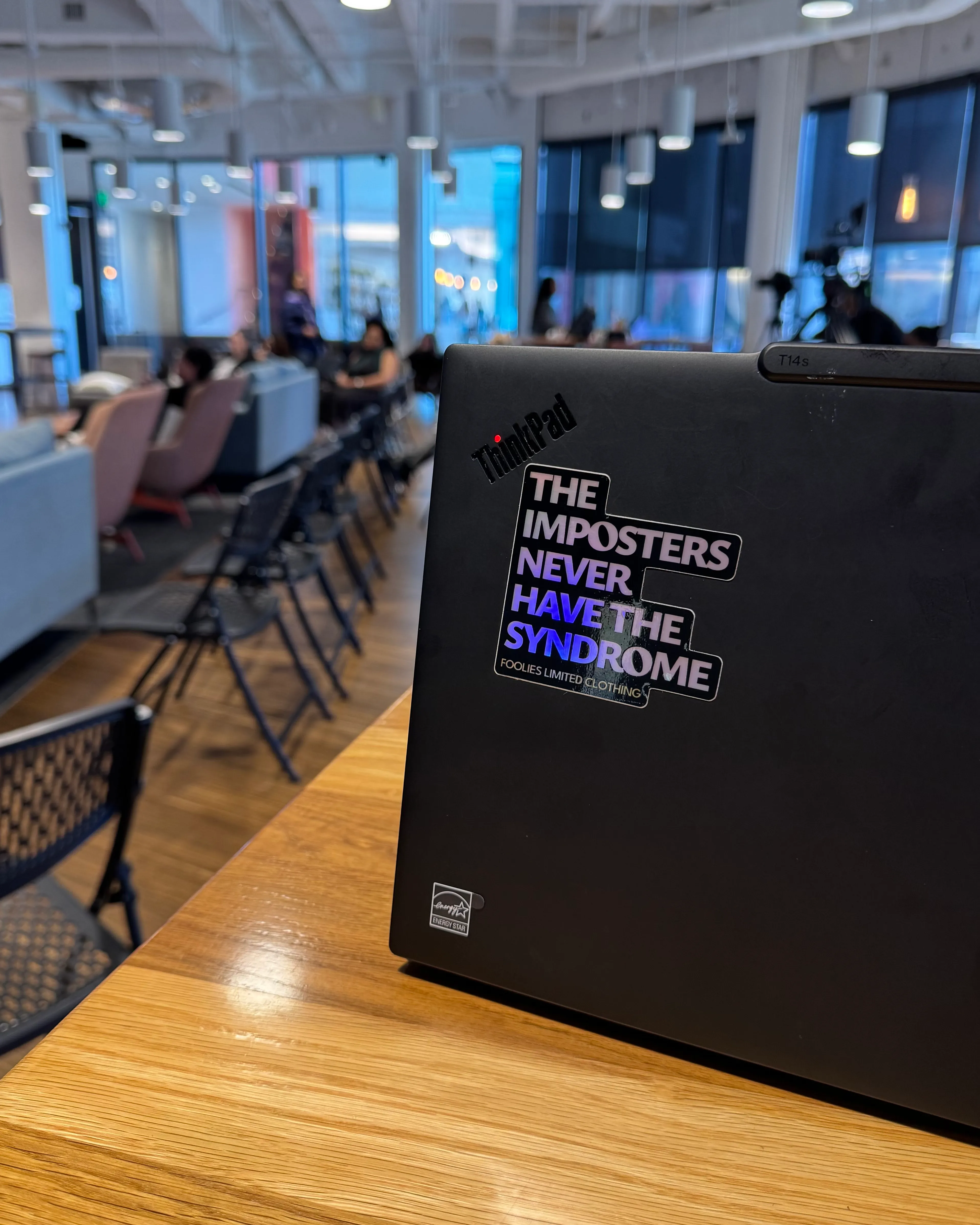 I love the sentiment of this laptop sticker.
The vibes are unbalanced
This time last year, the industry vibes around prompt engineering and generative AI were so high. There was just something wrong with me. I was in a personal funk, having a hard time getting my motivation up to that level.
This year I feel more centered but I’m looking around the room and I’m seeing that weird dead eye expression on more faces.
We’re acknowledging out loud the grief we feel about the way work is changing. If you haven’t been fired or affected by layoffs yet, you know ten people who have. We’re excited about the cool tools we’re able to build, but we can’t see exactly what the road looks like ahead.
The uncertainty about the industry, the world, what AI means for kids who are growing up with this new tech—it’s heavy enough that it makes the room feel off kilter.
World Cup frenzy
The FIFA World Cup is coming to Atlanta in 85 days. Let me tell you. Right now, between the disaster with the TSA going unpaid at the airport and my last few experiences navigating Atlanta on MARTA, I am not feeling optimistic about how the city is going to handle an extra 500K people purely from a travel logistics standpoint.
But what I did hear was a lot of side conversations about “helping small businesses activate” for World Cup tourists. If you’re a local coffee shop near the line of hotels where most World Cup visitors are going to stay, is your website optimized to get found? Is it internationalized? Are you running promos to take advantage of additional traffic from the event?
The general sense is that guidance from higher-ups is vague and individuals are stepping in to connect the dots at the ground level.
Claude skills supremacy
Last year we saw demos of image generation in Google Gemini and we were still talking about ChatGPT. This year, it’s all about Claude skills and everybody’s working out of the terminal.
One pattern I noticed is: it seems like we’re all using Claude to build the same types of business tools, like an AEO/SEO audit, for example. It made me wonder if this is really the most efficient way to solve these problems. Now we all have our own little AEO/SEO bots we have to maintain and keep up-to-speed on the latest rules and guidelines. Wouldn’t it make more sense if there was a single tool we could all share? Did I just reinvent SaaS?
Acceptance of AI media differs across age cohorts
One of my favorite lightning talks at the event this year was by a woman named April Arrglington. Her presentation covered how different generations of people respond to generative AI media.
Notably, people in my age cohort (elder millennial, gen x) had the strongest preferences against AI slop. We prefer human actors and cinematic content that looks grounded in reality. We don’t like the uncanny valley.
But as you step down into younger generations (gen z, gen alpha) you get scenarios where people are either tolerant of generative AI art as long as it’s disclosed, or where people genuinely enjoy generative AI art because it’s absurd. The statement here was young people know AI slop is slop but they like it and enjoy making fun of it.
This made me think about the absurd media I was into as a kid: Spongebob, Homestar Runner, The Sims, that viral dancing baby .gif from the Ally McBeal show
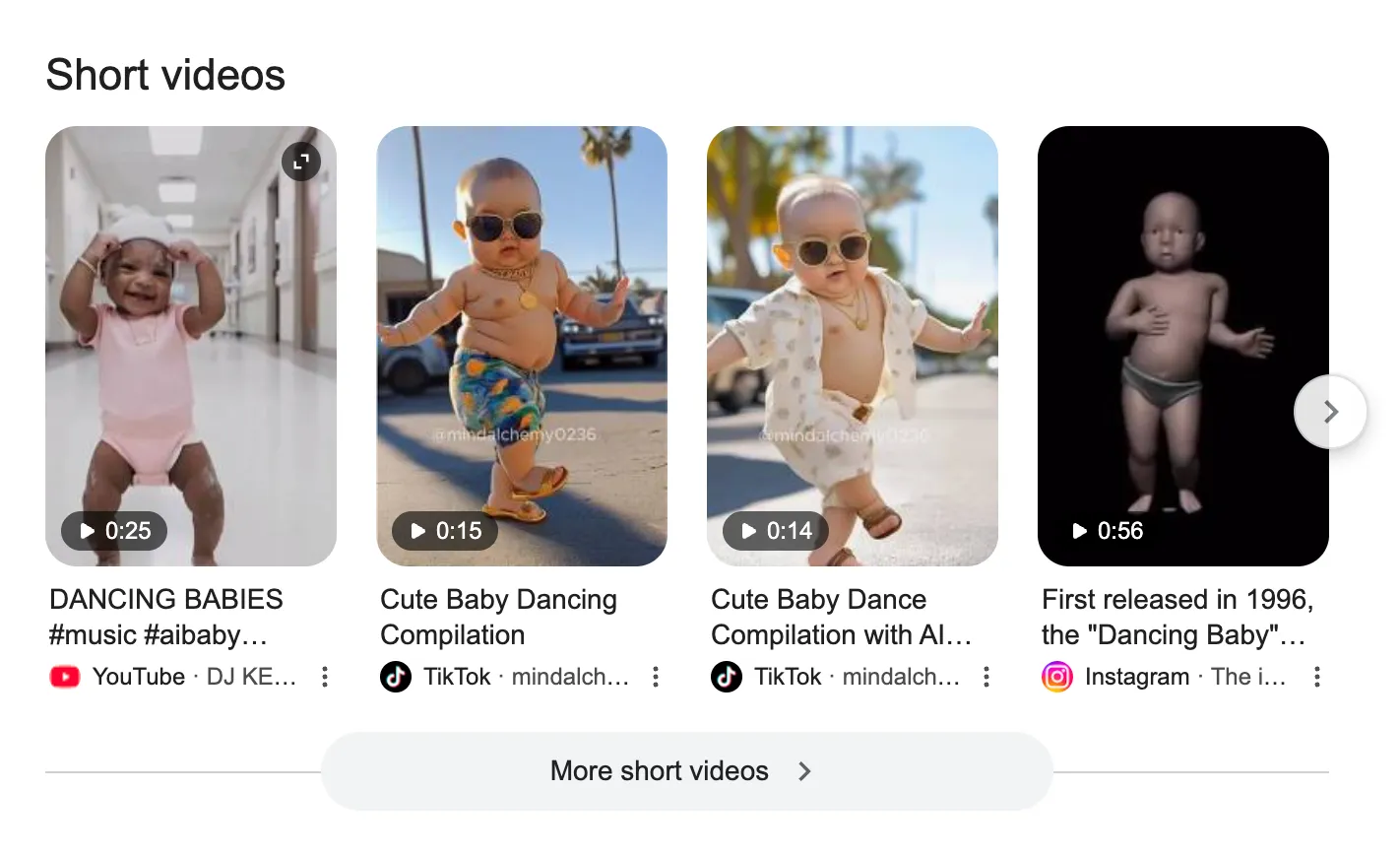
Today when you search “dancing baby” on Google you get three hits for new genAI YouTube shorts and TikTok videos before you get the Autodesk Oogachacka Baby from 1996—which! was 30 years ago!!
Looking back on early applications of CGI, some of it truly holds up against the test of time. Some of it is so bad that it’s funny. And there’s a vast library of creative mediocrity in the middle where the storytelling wasn’t strong enough to make the CGI acceptable and the cultural relevance wasn’t there to raise it up to meme territory.
Today GenAI on social media with instant distribution just removes the barrier so we get many multiples more of that junk in the middle.
This is why everybody is talking about taste and curation.
Good and bad in everything
There’s no skirting around it: AI is problematic. We know about the water usage and air pollution in Memphis. We know about the global exploitation behind-the-scenes as data labelers and annotators are paid low wages either pretending to be chatbots or processing large amounts of data which can include disturbing content. We know about Juliana Peralta, a young teenager who died by suicide after Character.ai chatbots initiated inappropriate sexual conversations and led her into a shame spiral.
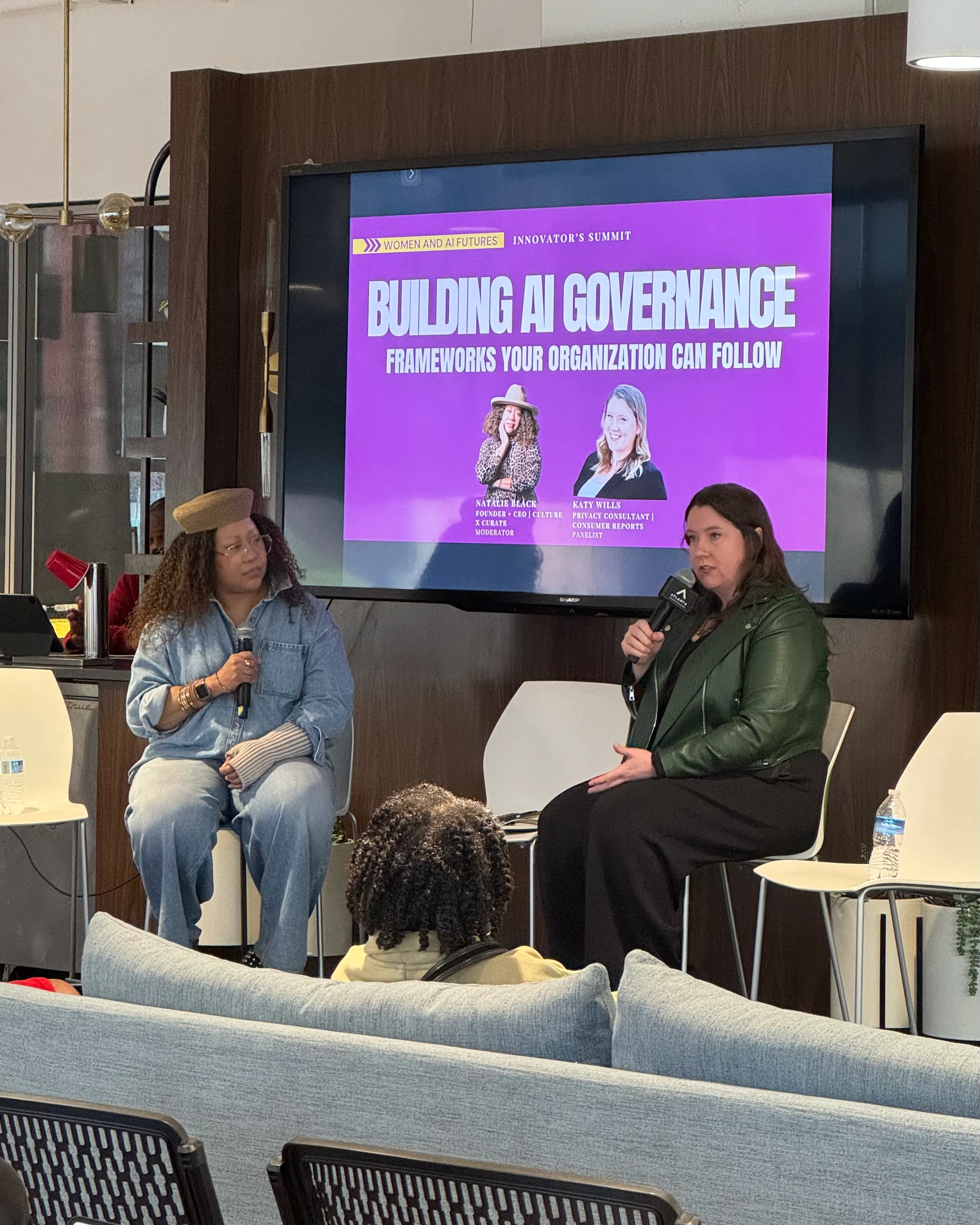 Natalie Black and Katy Wills discuss AI governance at Women + AI Futures 2026.
Some of us may hope that societies around the world might put governance and protections in place. But right now, it sure looks like the corporations with fat pockets have total control over the governments. Any kind of meaningful enforcement seems unlikely.
In my personal network, I know just as many self-professed AI vegans as I do claw-pilled agent-maxxing hype-merchants.
Is AI a tool or is it poison? Is it a paintbrush or is it a weapon?
Yes.
We resign and say, “Well, there’s good and bad in everything” because we know we can’t win if we try to fight the machine. We can’t prevent the deepfakes or the revenge porn or the AI psychosis.
Just like we can’t prevent school shootings or deadly traffic accidents or virus outbreaks. We can’t because we choose not to.
–
Zooming out, AI is going to exacerbate the disconnection and alienation that’s already happening between people on a massive scale. Instantly develop your own entertainment. Create your own romantic companions. Build your own tools with your allocation of compute power.
I understand why so many gen z tech workers want to reconvene in-person work in tech hub cities. They romanticize working in-person because it feels like an antidote to isolation. An office with real friends built-in.
(Aside) Please pause and ask your elders why you might not want to make your place of employment your primary community.
We all know we need human connection. But it doesn’t come naturally to everyone. It’s hard to be open and present.
Reflecting on the Women + AI Futures week for the second year, again, I’m feeling so much gratitude for the people who host and design the gathering. The food. The hospitality. The call and response.
I may get tired of hearing the same old tropes about why women are especially equipped to work in tech because we’re all the project managers of our lives outside of work. I may feel annoyed when I hear another city leader suggest we should just build the next hit! without any funding or support.
But I will never get tired of people who go out on a limb to create space for connection to happen. That’s something that will outlast the gold rush and outlive the bubble if this bubble ever pops.